

The Personal Growth Cycle
A Practical Way to Make Change Stick
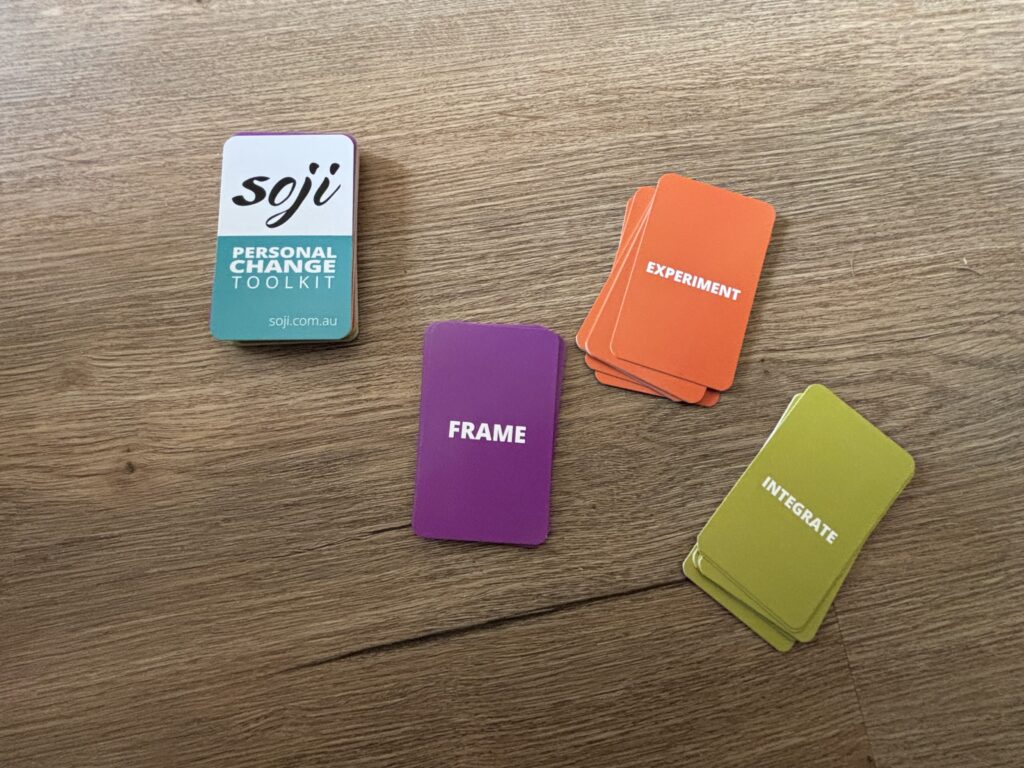
Most of us know the frustration of setting goals and watching them fade. Personal change rarely happens in a straight line. It’s about finding clarity, trying things out, and learning as you go. That’s why we created the Personal Growth Cycle, a simple, research-informed tool kit built around three phases: Frame, Experiment, and Integrate.
This approach draws on decades of insight from behavioural science and learning theory — from Carol Dweck’s work on mindset to Anders Ericsson’s research on deliberate practice, James Clear’s habit strategies, and Brené Brown’s call for courage and vulnerability. Here’s how it works.
Why a Growth Cycle Works
Change takes time because real progress happens through a continuous cycle of orienting, acting, and reflecting. This cycle works because it allows us to learn from each step, adapt to new challenges, and build better habits over time. Carol Dweck’s research shows that embracing challenges as learning opportunities fuels growth. Peter Senge explains that understanding the systems around us helps us adapt within a broader context. Simon Sinek argues that a clear sense of purpose keeps us motivated when progress is slow. Anders Ericsson demonstrates that expertise develops through repeated, focused practice. And Charles Duhigg reveals that lasting change is anchored in building small, consistent habits. Together, these insights show that cycling through reflection and action is what enables lasting transformation.
To put the Personal Growth Cycle into practice, start by picking one area of your life where you want to make a change—for example, improving your focus at work, building a regular exercise habit, or deepening a relationship. Commit to a 10-week action-reflection cycle: in week 1, use the prompts to frame your change and clarify your goals. In weeks 2 through 9, run small experiments—try out new habits, track your progress, and journal your experiences at the start of each week using the prompts provided for each phase. In week 10, focus on integrating what you’ve learned: reflect on what worked, what didn’t, and which habits or insights you want to carry forward. This structured approach helps you turn intentions into real, lasting change.
Week 1: Frame – Get Clear on What Matters
Before you act, you need direction. This phase is about building desire and momentum by connecting to your purpose and values.
- Clarify Your Why – Why does this change truly matter to you, and what difference will it make in your life or work? (Sinek: purpose drives commitment.)
- Visualise Your Future – If this change succeeds, what will your future look and feel like? (Russ Harris: values give us a compass.)
- Map Your System – What habits, routines, and relationships currently influence this area of your life? (Senge: see the system, not just the parts.)
- Find Some Leverage – Where could a small shift create a big impact?
- Align with Your Values – Which of your core values do you want to express more fully?
- Choose Your Actions – What two or three actions would make the biggest difference right now?
- Commit to Act Now – What are you willing to commit to do differently in the coming change cycle?
- Surface Hidden Barriers – What fears or competing priorities could derail you? (Brené Brown: vulnerability is the birthplace of growth.)
Weeks 2-9: Experiment – Test and Adapt
Change happens through action. This phase is about trying new behaviours and learning from feedback. Expertise is built through focused, feedback-rich practice. Small, consistent habits compound into big results over time. Habits are reinforced by cues, routines, and rewards—so design your environment to make success easier.
Prompts for this phase:
- Set Your Practice Goal – What specific behaviour will you practice this week, and why?
- Track Your Lead Indicators – What signals will show you that you’re making progress?
- Design Your Conditions – What conditions will help you follow through? (Fogg: make it easy, reduce friction.)
- Gather Feedback – What feedback are you noticing — from yourself or others?
- Spot Surprises – What surprised you in your experience or reactions?
- Adapt Your Approach – What adjustments will you make next week?
- Celebrate Small Wins – What small win are you proud of this week? (Clear: success reinforces identity.)
- Name the Friction – What resistance or friction did you notice, and how will you address it?
Week 10: Integrate – Reflect and Sustain
Reflection turns experience into learning. This phase helps you consolidate gains and prepare for the next cycle. Growth requires courage to look honestly at what worked and what didn’t. Reinforcement is key to sustaining habits. Staying connected to your values helps you stay grounded when life gets messy.
Prompts for this phase:
- Spot Emerging Habits – What behaviours have started to feel natural or routine?
- Identify Success Patterns – What patterns of success have you noticed?
- Acknowledge Challenges – What challenges taught you something valuable?
- Reinforce Your Identity – How has your sense of identity shifted through this sprint?
- Choose What to Sustain – Which practices will you commit to sustaining beyond this sprint?
- Let Go of What Doesn’t Serve – What behaviours or habits will you let go of?
- Capture Your Learning – What have you learned about yourself and your system?
- Frame the Next Cycle – What theme or focus feels most alive for your next sprint?
The Personal Growth Cycle is not about perfection—it’s about giving yourself the structure and space to learn, adapt, and grow with intention. By moving through each phase with curiosity and commitment, you can turn your goals into meaningful, lasting change. Remember that every cycle is a new opportunity to refine your approach and continue your journey of personal growth.
Reference List
- Carol Dweck – Mindset: The New Psychology of Success
- Peter Senge – The Fifth Discipline: The Art & Practice of The Learning Organization
- Simon Sinek – Start With Why: How Great Leaders Inspire Everyone to Take Action
- Anders Ericsson & Robert Pool – Peak: Secrets from the New Science of Expertise
- Charles Duhigg – The Power of Habit: Why We Do What We Do in Life and Business
- James Clear – Atomic Habits: An Easy & Proven Way to Build Good Habits & Break Bad Ones
- BJ Fogg – Tiny Habits: The Small Changes That Change Everything
- Brené Brown – Dare to Lead: Brave Work. Tough Conversations. Whole Hearts.
- Russ Harris – The Happiness Trap: How to Stop Struggling and Start Living
We hope these resources are as helpful for you as they have been for us. At Soji, we’ve found that effective change is less about a one-size-fits-all solution and more about having the right tools to develop and refine your practice.
To find out more about how to up skill your leaders in personal change, reach out to us via info@soji.com.au.
Photo by Priscilla Du Preez on Unsplash